Artisan of Banaras

Artisan of Banaras

Guardians of the Banarasi Handloom Legacy

The artisans of Banaras are the custodians of the legendary Banarasi handloom tradition, preserving centuries-old weaving skills through dedication and craftsmanship in Varanasi.

  • Master Craftsmanship: Exceptional ability to weave pure silk with intricate gold and silver zari work.
  • Traditional Motifs: Creation of iconic designs such as bel-buta, floral patterns, kalga, jaal, and Mughal-inspired motifs.
  • Generational Expertise: Craft skills passed down through families, preserving traditional Banarasi weaving techniques.
Artisan of Banaras
The Artisans of Banaras - Banaras & Looms

The Artisans

Custodians of India's Legendary Legacy

True Custodians of Heritage

The artisans of Banaras are the true custodians of India's legendary handloom legacy. For centuries, skilled weavers from Varanasi have transformed fine silk threads into exquisite Banarasi handloom masterpieces, using techniques passed down through generations. Their craftsmanship reflects patience, precision, and a deep respect for tradition.

Working on traditional looms, Banaras artisans create world-famous Banarasi silk sarees, known for their rich zari work, intricate motifs, and royal elegance. Each weave carries a story of cultural heritage, dedication, and dignity of labor. Today, these artisans not only preserve an ancient art form but also represent India's identity on global fashion and handloom platforms.

Master Weavers

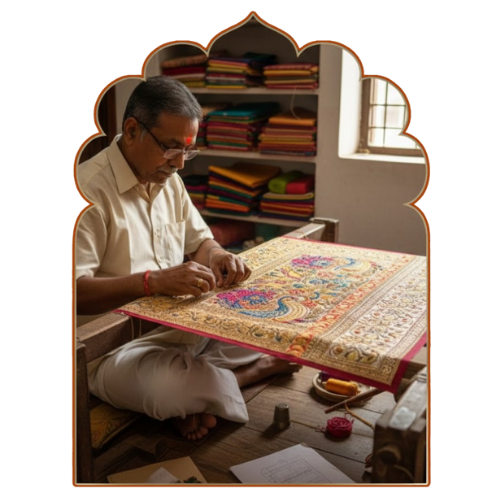
Master Weaver at Work

Guardians of Excellence

Master Weavers are the backbone of the Banarasi handloom industry. Based in Varanasi, they guide the entire weaving process—from designing patterns to supervising loom work. Their deep knowledge and years of experience ensure that every Banarasi handloom piece meets the highest standards of quality and authenticity.

Traditional Weaving Teacher

Teachers of Tradition

These skilled artisans play a crucial role in preserving traditional weaving techniques while training the next generation of weavers. Known for creating authentic Banarasi silk sarees with rich zari work and timeless designs, master weavers help keep India's handloom heritage alive and globally admired.

Threads Passed Down

Generational Stories of the Julaha Weavers

Hands That Inherited Skill

The Julaha community's story is one of skilled hands and rich tradition. For generations, these hands have embraced weaving with pride in the narrow lanes of Varanasi. Julaha families pass down a way of life defined by discipline and devotion to craft.

Weaving begins at home, where children grow up listening to the loom's rhythm and observing their elders transform threads into textiles. Learning is through observation and repetition, with each generation inheriting knowledge on loom tension, pattern recognition, and the importance of patience.

These narratives also highlight resilience. Despite modern challenges, Julaha weavers continue to uphold their handloom tradition, adapting to change while staying rooted in their heritage. Each finished weave reflects the collective effort of generations, united through skill and memory.

Ancestral Looms

The Julaha community's generational journey is integral to the heritage of Banarasi handloom weaving. For centuries, they have preserved this art through ancestral looms, passing down skills and values from one generation to the next. Based in Varanasi, the Julahas have significantly shaped the identity of Banarasi textiles.

Weaving is learned through tradition, not textbooks; children observe their elders, mastering the rhythm of silk threads and intricate patterns. This transfer of knowledge ensures the continuity of authentic craftsmanship.

Despite the rise of power looms and mass production, Julaha weavers remain committed to handmade excellence, preserving the legacy of Banarasi silk sarees and brocades. Today, they symbolize living heritage, where each fabric reflects skill, patience, and cultural pride, connecting the past with the future.
Women in Handloom

The Silent Strength of India's Weaving Heritage

👩‍🎨

Keepers of Tradition

Women comprise over 72% of India's handloom workers. They master processes such as yarn preparation, dyeing, warping, and detailed weaving, making them living custodians of cultural heritage.

💪

Economic Empowerment

Handloom provides women with sustainable livelihoods and financial independence. Women-led self-help groups and cooperatives have strengthened their presence in the sector.

🎨

Creativity & Craftsmanship

Women bring unique aesthetics to handloom textiles. Their understanding of color harmony, patterns, and textures adds soul to every fabric.

🌟

Recognition & Support

Despite their contribution, women often remain under-recognized. Promoting fair wages, skill development, and digital access can help them gain deserved recognition.

Young Weavers & the Future

Young weavers are shaping the future of India's handloom industry by blending ancestral skills with modern vision. Across traditional weaving hubs like Varanasi, a new generation is stepping up to carry forward centuries-old craftsmanship while adapting it to contemporary markets and global demand.

Reviving Tradition with Modern Thinking

Today's young handloom weavers are deeply rooted in tradition yet open to innovation. While they respect classic weaving techniques and heritage designs, they are also experimenting with modern patterns, sustainable materials, and updated color palettes. This balance helps keep handloom relevant for younger consumers and international buyers.

Technology & Digital Reach

Unlike earlier generations, young weavers are embracing technology. From using improved looms and eco-friendly dyeing methods to promoting handloom products through social media and e-commerce platforms, they are expanding market access and increasing visibility for authentic handwoven textiles.

Employment, Identity & Pride

For many youths, handloom is no longer just a family occupation—it is a source of pride and identity. Skill training programs, government initiatives, and handloom startups are encouraging young artisans to see weaving as a dignified, sustainable career rather than a fading tradition.

A Sustainable Future Ahead

Young weavers represent hope, continuity, and innovation. By empowering them with skills, technology, and opportunities, the handloom industry can secure its future while preserving India's cultural heritage for generations to come.

"

For artisans, the loom is more than a tool; it is a companion in daily life. The steady movement of threads reflects years of practice, discipline, and inherited knowledge.

— Voices from the Loom

Voices from the Loom

"Voices from the Loom" captures the lived experiences, emotions, and wisdom of handloom weavers whose lives are intertwined with the rhythm of the loom. In weaving centers like Varanasi, every fabric tells a story—not just of silk and zari, but of dedication, struggle, pride, and hope passed down through generations.

For artisans, the loom is more than a tool; it is a companion in daily life. The steady movement of threads reflects years of practice, discipline, and inherited knowledge. Through their voices, we hear stories of early mornings, patient craftsmanship, and the quiet satisfaction of seeing a design come alive thread by thread.

Weavers speak of changing times—of balancing tradition with modern demands. While markets evolve and trends shift, their commitment to authenticity remains strong. Many artisans express pride in preserving handloom heritage while also aspiring for fair recognition, better opportunities, and sustainable livelihoods.

"Voices from the Loom" also highlights resilience. Despite economic challenges and competition from machine-made fabrics, handloom artisans continue to weave with passion and purpose. Their voices remind us that supporting handloom means supporting real people, real skills, and a living cultural legacy.

By listening to the voices behind the fabric, we connect more deeply with the art of handloom and the hands that keep this timeless tradition alive.

Back to Home
Follow Us - Banaras Kala Bhawan

Follow Us

Footer - Banaras Heritage